
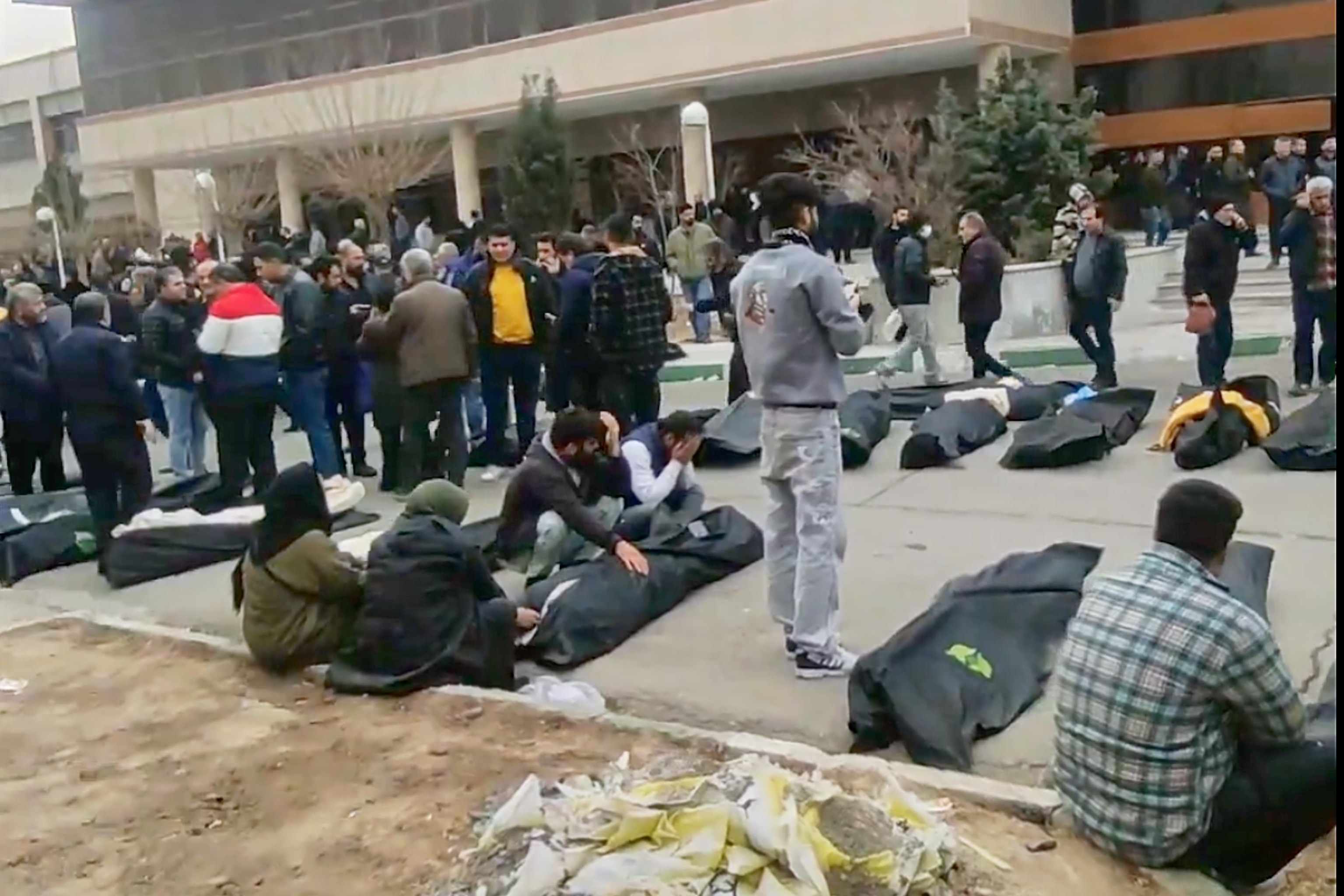
LONDON -- More than 2,500 people have died during nationwide protests in Iran over the past 17 days, activists said Wednesday, as U.S. President Donald Trump expressed his support for demonstrators and hinted at potential American intervention against the government in Tehran.
The Human Rights Activists News Agency (HRANA) said it had verified a total of 2,571 deaths -- and is reviewing reports of 779 other deaths -- since the protests began on Dec. 28.
The confirmed deaths include 2,403 adult protesters, 12 protesters under the age of 18, 147 government-affiliated personnel and nine non-protesting civilians, HRANA said.
Another 1,134 protesters have been seriously injured, HRANA said, with at least 18,137 people arrested.
The HRANA data relies on the work of activists inside and outside the country. ABC News cannot independently verify these numbers. The Iranian government has not provided any civilian death tolls related to the ongoing protests.

As casualties mounted, Trump wrote on social media on Tuesday, "Iranian Patriots, KEEP PROTESTING -- TAKE OVER YOUR INSTITUTIONS!!! Save the names of the killers and abusers. They will pay a big price."
"I have cancelled all meetings with Iranian Officials until the senseless killing of protesters STOPS. HELP IS ON ITS WAY," Trump added.
When later pressed by a reporter during a visit to Michigan on Tuesday on what he meant by help is on its way, Trump responded, "You're gonna have to figure that one out, I'm sorry."
Trump said he thought it was "a good idea" for Americans to evacuate from Iran. The State Department on Tuesday said that all U.S. citizens should leave the country.
Trump said he hasn't been given an accurate number of how many people have been killed so far in the protests, but said "one is a lot."
"I think it's a lot. It's too many, whatever it is," he said.

Later Tuesday, he told reporters that he will be receiving "accurate numbers" on how many protesters have been killed in Iran soon and "we'll act accordingly."
Trump on Monday announced a 25% tariff on any country doing business with Iran. The president and White House press secretary Karoline Leavitt suggested other options are also still under discussion.
One U.S. official told ABC News that among the options under consideration are new sanctions against key regime figures or against Iran's energy or banking sectors.
Members of Trump's national security team -- including Secretary of State Marco Rubio, Defense Secretary Pete Hegseth and CIA Director John Ratcliffe -- met Tuesday morning to discuss Iran, according to Leavitt. Trump did not attend the meeting, nor was he scheduled to, she said.
Vice President JD Vance also led an Iran strategy meeting on Tuesday afternoon with the National Security Council principals committee, a source with direct knowledge of the meeting confirmed to ABC News.
Iranian officials have threatened retaliatory strikes against U.S. and Israeli targets in the event of any outside intervention.

Protests have been spreading across the country since late December. The first marches took place in downtown Tehran, with participants demonstrating against rising inflation and the falling value of the national currency, the rial.
As the protests spread, they have taken on a more explicitly anti-government tone.
Government forces have responded with a major security crackdown. A sustained national internet outage has also been in place across the country. Online monitoring group NetBlocks said on Wednesday that the blackout had surpassed 132 hours.
Supreme Leader Ayatollah Ali Khamenei and top Iranian officials have said they are willing to engage with the economic grievances of protesters, though have framed the unrest as driven by "rioters" and "terrorists" sponsored by foreign nations -- prime among them the U.S. and Israel -- and supported by foreign infiltrators.
On Wednesday, President Masoud Pezeshkian was quoted by state media telling a meeting with Economy Ministry officials that if economic conditions were improved, "we wouldn't be witnessing their protests on the streets."
Dissident figures abroad have urged Iranians to press the protests and topple the government in Tehran.

Iran's exiled Crown Prince Reza Pahlavi -- who from his base in the U.S. has become a prominent critic of the Iranian government -- on Monday appealed to Trump to act in support of the protesters.
On Tuesday, Pahlavi called on members of the Iranian military to join the protests. "You are the national military of Iran, not the military of the Islamic Republic," he wrote on X.


No comments:
Post a Comment